Apple Trees
Our apple trees, like many fruit trees, are propagated by grafting. There are two parts to an apple tree. The scion is the fruiting part of the tree, which gives you the variety of the apple, and the rootstock, which influences the mature size and hardiness of the tree, and determines the time it takes for the tree to fruit. We sell Standard, Semi-Dwarf, Dwarf, and Mini-Dwarf trees that do not require a lot of space and yet, will bear large fruit.
A few key notes on successful planting methods:
- Trees must be planted in well-drained soil
- Six hours of sunlight; full sun preferred
- Stake all trees for the first two years
- Dwarfs must have permanent stakes
- Tree guards should be used
- Plant at least two different apple tree varieties for Cross-Pollination
- Plant disease-resistant trees for less maintenance; we are happy to help make any suggestions you might need
We categorize our apple trees into at least five sizes: Petite, Maiden, Field Ready, Hand Select, and Container depending on the size of the tree. The Petite tree is our smallest graded tree less than 2 years in age; Maiden trees are usually 2 years old and are branchless. These are also called whips and will bear in 2-3 years. A Field Ready tree is 2-3 years old and might have some lateral branching, be thicker above the graft, and will bear in 1-2 years. The Hand Select trees are only about 20% of trees we have and are 3 year old trees, 6-9’ tall and can be heavily branched. You can expect fruiting on a Hand Select tree in about a year.


Jonathan Apple Trees
Original price
$25.00
-
Original price
$99.00
Original price
$25.00
-
$99.00
$25.00
-
$99.00
Current price
$25.00
The Jonathan apple is a seedling of the Esopus Spitzenburg discovered in 1826 on Philip Ricks' farm in Woodstock, NY. A different person, Jonathan ...
View full details
Original price
$25.00
-
Original price
$99.00
Original price
$25.00
-
$99.00
$25.00
-
$99.00
Current price
$25.00

KinderKrisp Apple Tree
Original price
$25.00
-
Original price
$65.00
Original price
$25.00
-
$65.00
$25.00
-
$65.00
Current price
$25.00
Created in South Haven, MN by David McGregor, the KinderKrisp is a new variety that was hybridized from the famous Honeycrisp Apple. Created to be ...
View full details
Original price
$25.00
-
Original price
$65.00
Original price
$25.00
-
$65.00
$25.00
-
$65.00
Current price
$25.00

King David Apple Trees
Original price
$25.00
-
Original price
$249.00
Original price
$25.00
-
$249.00
$25.00
-
$249.00
Current price
$25.00
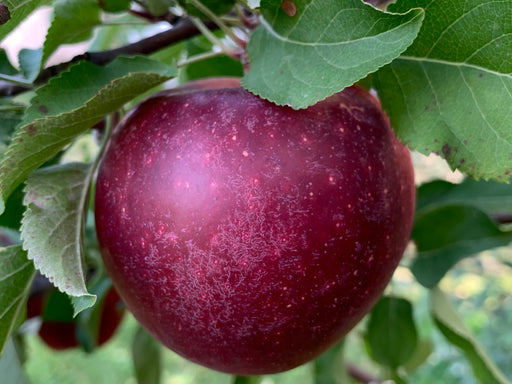
Discovered by chance in an orchard in Washington County, Arkansas in 1893, the King David Apple is probably an offspring of Jonathan and Arkansas B...
View full details
Original price
$25.00
-
Original price
$249.00
Original price
$25.00
-
$249.00
$25.00
-
$249.00
Current price
$25.00
Liberty Apple Trees
Original price
$24.00
-
Original price
$85.00
Original price
$24.00
-
$85.00
$24.00
-
$85.00
Current price
$24.00
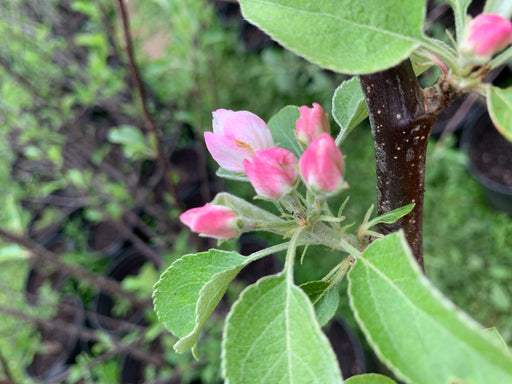
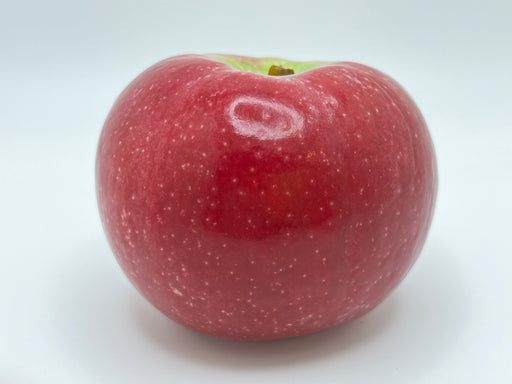
Developed in 1955 at the NYSAES as an offspring of the Macoun and Purdue 54-12 (a Japanese flowering crabapple) to create an extremely disease resi...
View full details
Original price
$24.00
-
Original price
$85.00
Original price
$24.00
-
$85.00
$24.00
-
$85.00
Current price
$24.00

Lucy(™) Rose Apple Tree
Original price
$25.00
-
Original price
$65.00
Original price
$25.00
-
$65.00
$25.00
-
$65.00
Current price
$25.00
Description Coming Soon! USDA Zone: 4-8 Mature Height: G.11 ~11-13' Tall at Maturity; Dwarf Sun: Full Sun Blooms Group: Probably Bloom Group 3 Ripe...
View full details
Original price
$25.00
-
Original price
$65.00
Original price
$25.00
-
$65.00
$25.00
-
$65.00
Current price
$25.00
Major Apple Tree
Original price
$41.00
-
Original price
$65.00
Original price
$41.00
-
$65.00
$41.00
-
$65.00
Current price
$41.00
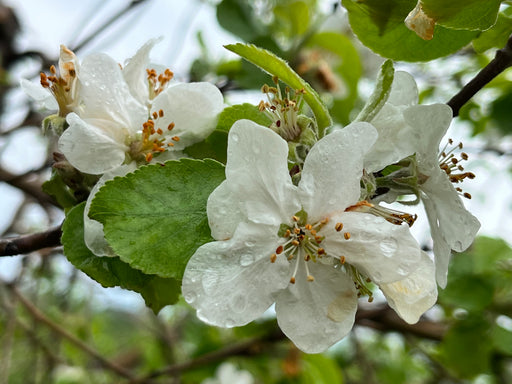
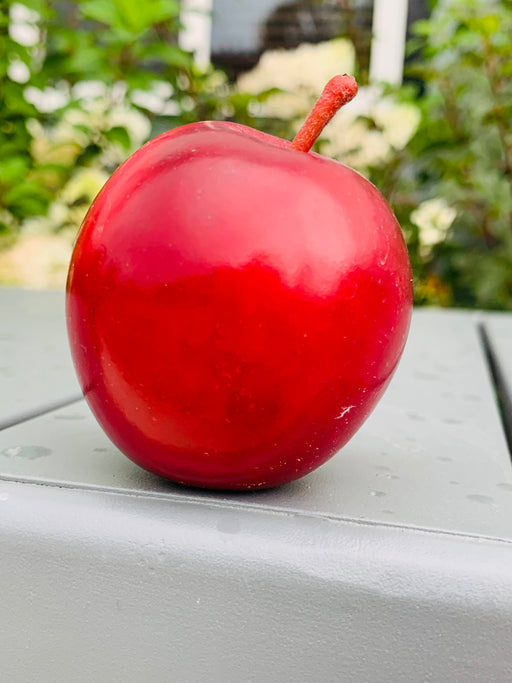
An English cider apple producing a full bittersweet juice. USDA Zone: 4-9 Mature Height: G.41 ~12-14' Dwarf Sun: Full Sun Bloom Group: 3 Mid Seaso...
View full details
Original price
$41.00
-
Original price
$65.00
Original price
$41.00
-
$65.00
$41.00
-
$65.00
Current price
$41.00
McIntosh Apple Tree
Original price
$25.00
-
Original price
$115.00
Original price
$25.00
-
$115.00
$25.00
-
$115.00
Current price
$25.00
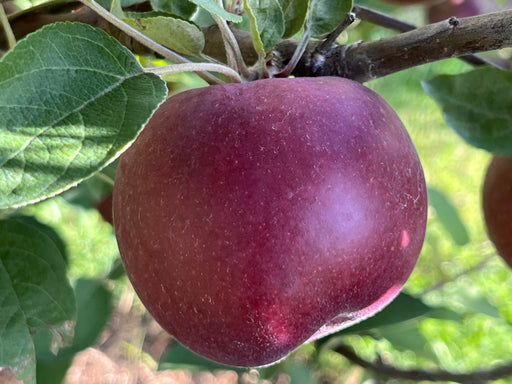
One of the most popular apples in the world today, the McIntosh (sometimes spelled Macintosh) apple gained its roots back in 1811 at a farm in 'Upp...
View full details
Original price
$25.00
-
Original price
$115.00
Original price
$25.00
-
$115.00
$25.00
-
$115.00
Current price
$25.00
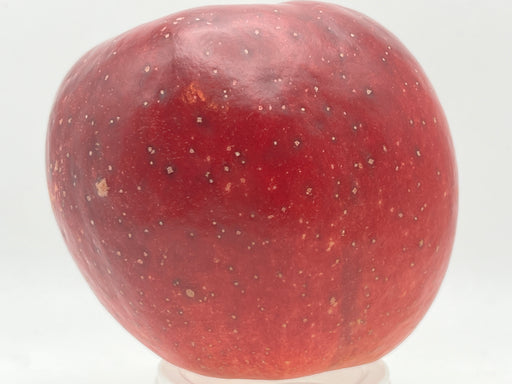
Melrose Apple Trees
Original price
$25.00
-
Original price
$249.00
Original price
$25.00
-
$249.00
$25.00
-
$249.00
Current price
$25.00
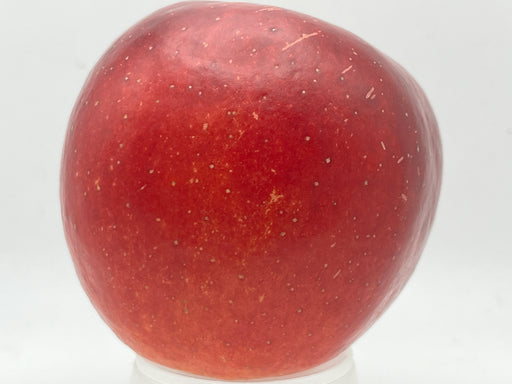
Developed by Freeman Howlett at the Ohio AES in 1944, the Melrose apple is the official state apple of Ohio. Its late harvest time makes this a goo...
View full details
Original price
$25.00
-
Original price
$249.00
Original price
$25.00
-
$249.00
$25.00
-
$249.00
Current price
$25.00

Mollie's Delicious Apple Tree
Original price
$25.00
-
Original price
$65.00
Original price
$25.00
-
$65.00
$25.00
-
$65.00
Current price
$25.00
Mollie’s Delicious is a classic American apple variety developed at the New Jersey Agricultural Experiment Station in New Brunswick, New Jersey, an...
View full details
Original price
$25.00
-
Original price
$65.00
Original price
$25.00
-
$65.00
$25.00
-
$65.00
Current price
$25.00
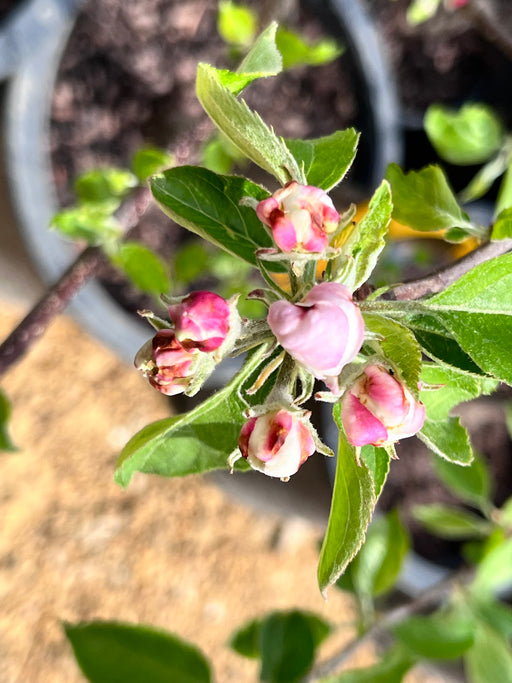
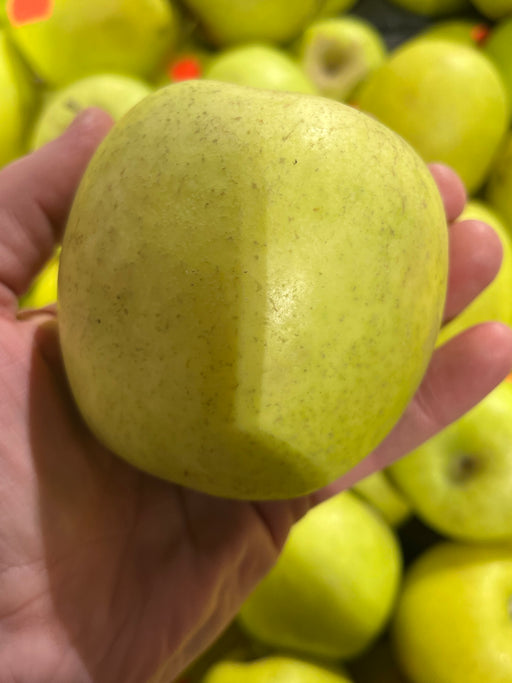
Mutsu Apple Trees
Original price
$25.00
-
Original price
$115.00
Original price
$25.00
-
$115.00
$25.00
-
$115.00
Current price
$25.00
Also known as a Crispin Apple, the Mutsu apple is a cross between the Golden Delicious and Indo apples and originates from the Aomori Prefecture in...
View full details
Original price
$25.00
-
Original price
$115.00
Original price
$25.00
-
$115.00
$25.00
-
$115.00
Current price
$25.00
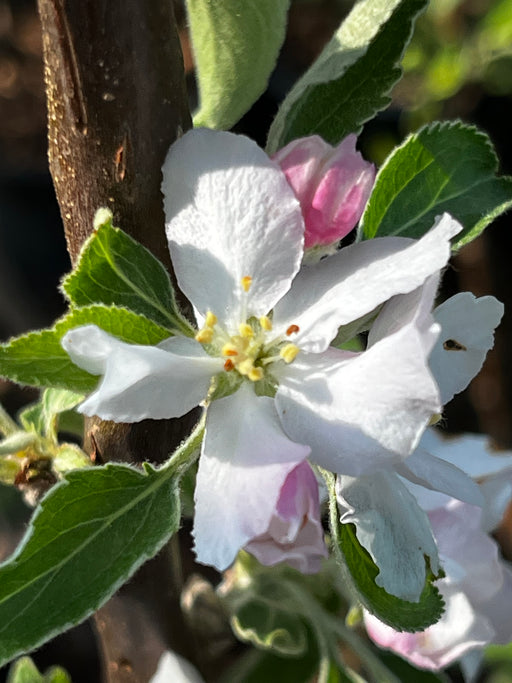
Newton Pippin Apple Tree
Original price
$41.00
-
Original price
$115.00
Original price
$41.00
-
$115.00
$41.00
-
$115.00
Current price
$41.00
Description Coming Soon. USDA Zone: 4-8 Mature Heights: EMLA.7 ~15-17' tall; Semi-Dwarf M.111 ~18-21' tall; Semi-Dwarf Sun: Full Sun Bloom Group: ...
View full details
Original price
$41.00
-
Original price
$115.00
Original price
$41.00
-
$115.00
$41.00
-
$115.00
Current price
$41.00
Northern Spy Apple Trees
Original price
$41.00
-
Original price
$115.00
Original price
$41.00
-
$115.00
$41.00
-
$115.00
Current price
$41.00
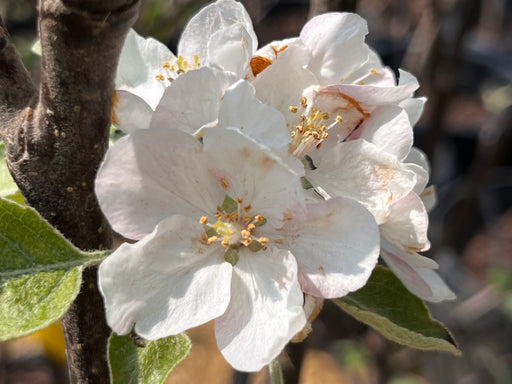
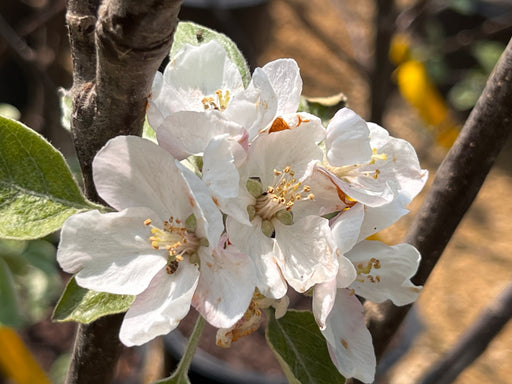
Originating in 1804 as a seedling on the farm of Herman Chapin in East Bloomfield, NY, the Northern Spy Apple almost did not survive. Attacked by r...
View full details
Original price
$41.00
-
Original price
$115.00
Original price
$41.00
-
$115.00
$41.00
-
$115.00
Current price
$41.00

Northpole™ Columnar Apple Tree
Original price
$41.00
-
Original price
$149.00
Original price
$41.00
-
$149.00
$41.00
-
$149.00
Current price
$41.00
The Northpole columnar apple tree is a compact, upright variety bred for small gardens, patios, and high-density plantings. It produces medium to l...
View full details
Original price
$41.00
-
Original price
$149.00
Original price
$41.00
-
$149.00
$41.00
-
$149.00
Current price
$41.00
Nova Spy Apple Trees
Original price
$25.00
-
Original price
$65.00
Original price
$25.00
-
$65.00
$25.00
-
$65.00
Current price
$25.00
Developed at the Atlantic Food and Horticultural Research Centre in Kentville, Nova Scotia in 1986, the Nova Spy became commercially available in 1...
View full details
Original price
$25.00
-
Original price
$65.00
Original price
$25.00
-
$65.00
$25.00
-
$65.00
Current price
$25.00


Orange Winter Apple Trees
Original price
$41.00
-
Original price
$65.00
Original price
$41.00
-
$65.00
$41.00
-
$65.00
Current price
$41.00
Grafted from trees at 1913 Kickapoo's Orchard~ this apple is cold hardy and makes a great pie. The apple is quite large, nearly 4" across and is ve...
View full details
Original price
$41.00
-
Original price
$65.00
Original price
$41.00
-
$65.00
$41.00
-
$65.00
Current price
$41.00


Pink Luster® Apple Trees
Original price
$41.00
-
Original price
$65.00
Original price
$41.00
-
$65.00
$41.00
-
$65.00
Current price
$41.00
The Pink Luster® is another Cornell University creation first debuted to the public in 2020. It is a large apple that is quite colorful. It has a y...
View full details
Original price
$41.00
-
Original price
$65.00
Original price
$41.00
-
$65.00
$41.00
-
$65.00
Current price
$41.00


Pinova Apple Trees
Original price
$25.00
-
Original price
$65.00
Original price
$25.00
-
$65.00
$25.00
-
$65.00
Current price
$25.00
Germany, 1990s. Cross between Golden Delicious × (Duchess of Oldenburg × Cox’s Orange Pippin). Excellent eater with crisp flesh and striated skin. ...
View full details
Original price
$25.00
-
Original price
$65.00
Original price
$25.00
-
$65.00
$25.00
-
$65.00
Current price
$25.00

Pound Sweet Apple Trees
Original price
$41.00
-
Original price
$65.00
Original price
$41.00
-
$65.00
$41.00
-
$65.00
Current price
$41.00
Originating in Connecticut in 1834, the apple was primarily used for baking in desserts but apparently is not the best in pies. It is green with a ...
View full details
Original price
$41.00
-
Original price
$65.00
Original price
$41.00
-
$65.00
$41.00
-
$65.00
Current price
$41.00
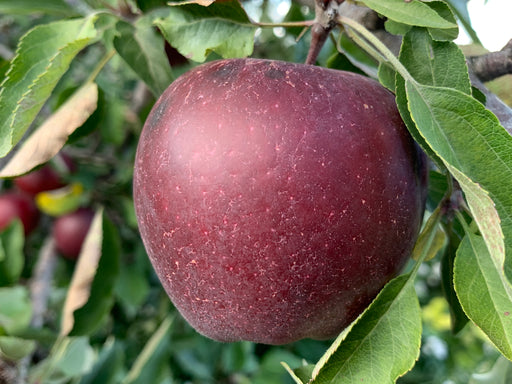
Red Delicious Apple Tree
Original price
$25.00
-
Original price
$115.00
Original price
$25.00
-
$115.00
$25.00
-
$115.00
Current price
$25.00
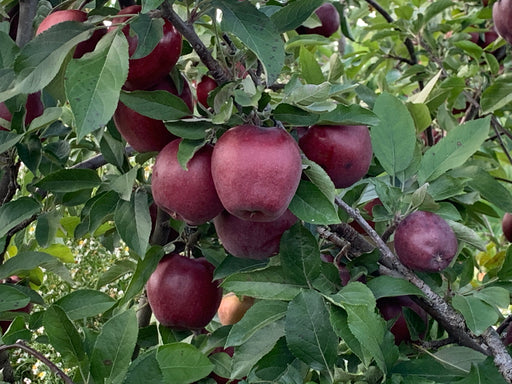
The Red Delicious is among the most popular of varieties. This particular cultivar of Red Delicious originates from Peru, Iowa in 1872. Since then,...
View full details
Original price
$25.00
-
Original price
$115.00
Original price
$25.00
-
$115.00
$25.00
-
$115.00
Current price
$25.00
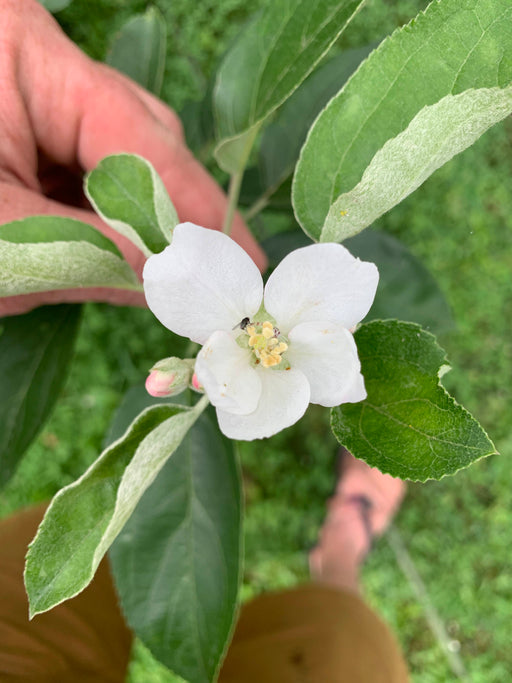
Red Gravenstein Apple Tree
Original price
$47.00
-
Original price
$65.00
Original price
$47.00
-
$65.00
$47.00
-
$65.00
Current price
$47.00
The Red Gravenstein is a sport of the much older Gravenstein Apple. Originally planted in the 1670s, the Gravenstein apple was used as a cooking an...
View full details
Original price
$47.00
-
Original price
$65.00
Original price
$47.00
-
$65.00
$47.00
-
$65.00
Current price
$47.00
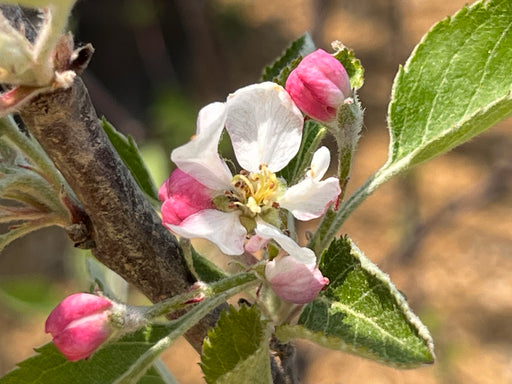
Red Rome Apple Tree
Original price
$41.00
-
Original price
$65.00
Original price
$41.00
-
$65.00
$41.00
-
$65.00
Current price
$41.00
In 1817, Joel Gillet discovered a seedling tree from a nursery delivery and one of his children planted it near the Ohio River in Rome Township. A ...
View full details
Original price
$41.00
-
Original price
$65.00
Original price
$41.00
-
$65.00
$41.00
-
$65.00
Current price
$41.00
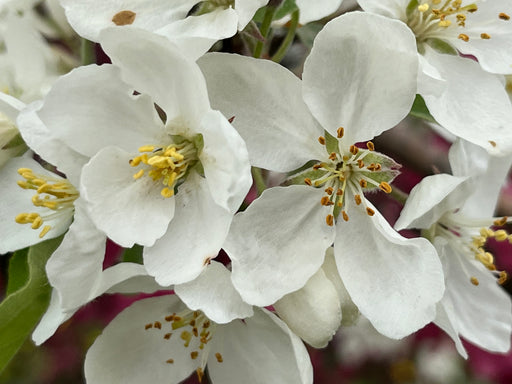
Red Spy Apple Tree
Original price
$41.00
-
Original price
$65.00
Original price
$41.00
-
$65.00
$41.00
-
$65.00
Current price
$41.00
Discovered in New York in 1895 as a sport of the then common Northern Spy Apple. It is larger and redder than its parent yet retains much of the fl...
View full details
Original price
$41.00
-
Original price
$65.00
Original price
$41.00
-
$65.00
$41.00
-
$65.00
Current price
$41.00
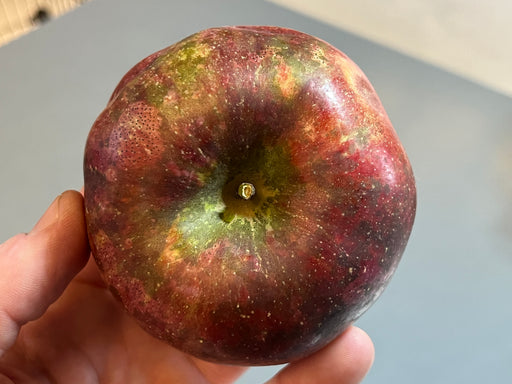
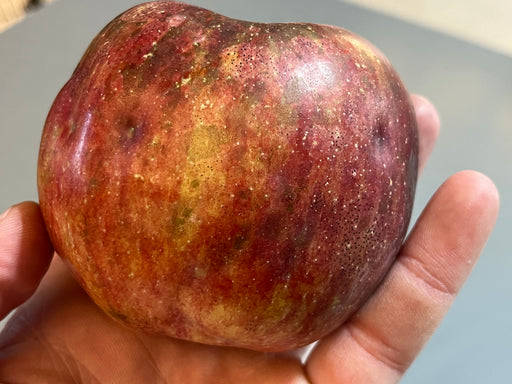
Red Vein Apple Tree
Original price
$25.00
-
Original price
$115.00
Original price
$25.00
-
$115.00
$25.00
-
$115.00
Current price
$25.00
Description Coming Soon! USDA Zone: 4-8 Mature Height EMLA 7 ~14-17' tall; Semi-dwarf Sun: Full Sun Bloom Group: 4, Late Mid Season Ripening Time:...
View full details
Original price
$25.00
-
Original price
$115.00
Original price
$25.00
-
$115.00
$25.00
-
$115.00
Current price
$25.00
Royal Limbertwig Apple Tree
Original price
$25.00
-
Original price
$65.00
Original price
$25.00
-
$65.00
$25.00
-
$65.00
Current price
$25.00
Early 1800s Tennessee cider apple. This variety is one of several Limbertwig variants that have regained popularity in the recent decades. First tr...
View full details
Original price
$25.00
-
Original price
$65.00
Original price
$25.00
-
$65.00
$25.00
-
$65.00
Current price
$25.00